This is an exciting blog post to write, just a few days after we’ve wrapped up Phase 2 of this project. Ages ago, we were contacted by the Trinity Historical Society (THS) to consult on the restoration of the St. Paul’s Anglican Church’s churchyard, located right in the heart of historic Trinity, NL. We visited the site last fall to meet with project leads Ian Morris and Kevin Toope to discuss how to best go about the restoration of the site, see some of the more high-priority gravestones, and take photos for our proposal. Phase 1 of the project for the THS was the restoration of the war memorial which also stands in the churchyard, which we discussed via email months ago but were not undertaking the physical work for, as they were primarily replacing the concrete foundation (the monument and its interpretive panels looks amazing, be sure to check it out when you visit Trinity). After months of fundraising through an ‘Adopt a Headstone‘ project to support the restoration, and amazing community turnout, we were able to proceed with Phase 2 of the project, which consisted of two weeks of restoration on the site to repair an estimated 75 gravestones.
Thank you to Corey Jones, owner of Trinity Cabins, for donating one of the cabins to the project so we had somewhere to stay while in Trinity! And thank you to everyone who came out to see us while we were on site the last two weeks, we were overwhelmed by the support from the community!
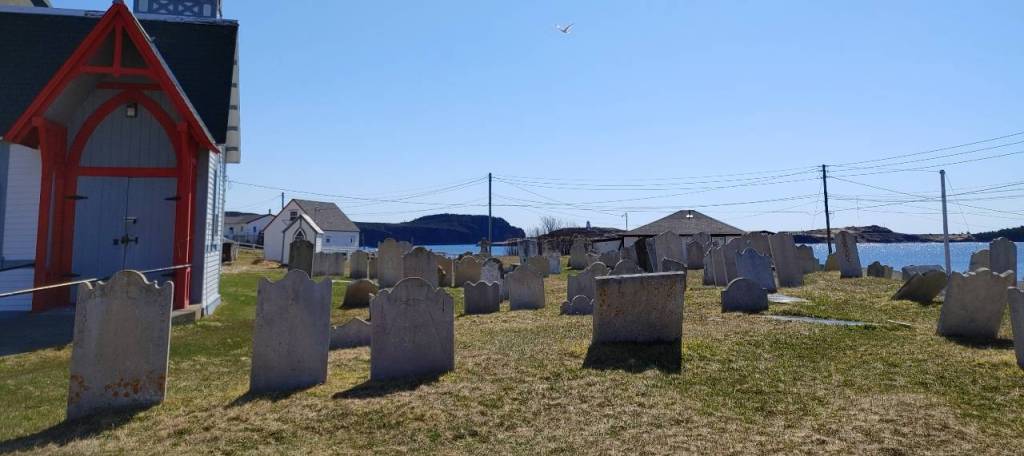
This was a daunting project at the start! There are 188 recorded gravestones standing or laying at the churchyard, but Kevin informed us that surviving records back to 1750 indicate 2100 burials. The first church at this site (the current church is #3) was constructed in 1730, so there are 20 years without records, and the site may have even been a burial ground before the church was constructed. Regardless, 188 gravestones is a lot to undertake, and we estimated that the restoration of the entire site would take approximately 5 weeks. The site had been previously recorded and mapped, so we made the decision to organize the work by starting in section ‘1’, closest to the fence, and go from there, towards the back of the church.
As you can see below in these historic photos provided by Kevin, the churchyard has seen some transformations! In the 1990s, restoration attempts were made on many of the broken and fallen stones, which involved resetting them with bricks around the bottom…taken from the then-rubble of the Lester-Garland House (since reconstructed). These repairs did not hold, and as you can see in our photos, many of the stones have since fallen over, sunk, or were leaning again.

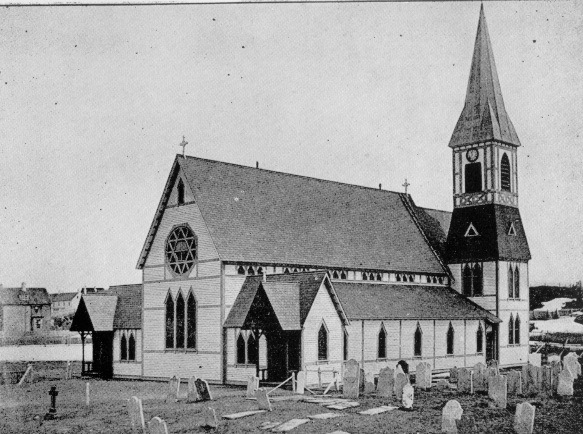
The majority of the gravestones at this churchyard were made from limestone, imported from Ireland or England by people who could afford it. These stones were also carved overseas, so residents of Trinity were ordered the full gravestone, text and all, to be shipped to them! This occurred until there were gravestone carvers established in Newfoundland, which didn’t happen until the 19th century. Alexander Smith, for instance, was the first carver to import marble for gravestones in the province and this didn’t happen until the 1830s or 40s.
Due to the historic nature of the site, we were required to apply for and hold an archaeological permit through the Provincial Archaeology Office to undertake this work. Conservation of historic gravestones requires expertise, experience, and permissions, and should not be undertaken on a whim. Following the fieldwork, we will be cataloguing artifacts that were recovered from the bases of these gravestones for deposition into the provincial repository at the The Rooms.

The map here shows the sections of the churchyard, 1 through 14 horizontally, and A through F vertically. The coloured blue markers are the ones that we completed over the two weeks of Phase 2! These gravestones are wonderful to work with, even with the small issues caused by the 90s reset. Because the majority of the stones are 200-300 years old, the style was typically a simple upright tablet without a key, but rather held up with the stone simply extending at least a foot below the surface. The compactness of the ground around the stone will keep them in place, so when we reset stones from leaning to upright, we provide it with a tamped foundation of crusher dust (also called screening or Class A), which is a fine, angular gravel and dust. It forms a solid base, and allows drainage. We then replace the stone and pack crusher dust around the bottom of the stone below the surface to provide additional stability.
We had amazing weather the entire time we were in Trinity, especially for our first week there! Everyone who came by during our time on site mentioned that we were very lucky with our weather. I feel like whenever it’s sunny for a while in NL, everyone starts to get suspicious about the weather! While the first week was sunny and relatively quiet, the second week saw tourists trickling into the community and popping by to check out the church and graveyard, and we were happy to answer any questions that they had about our work!
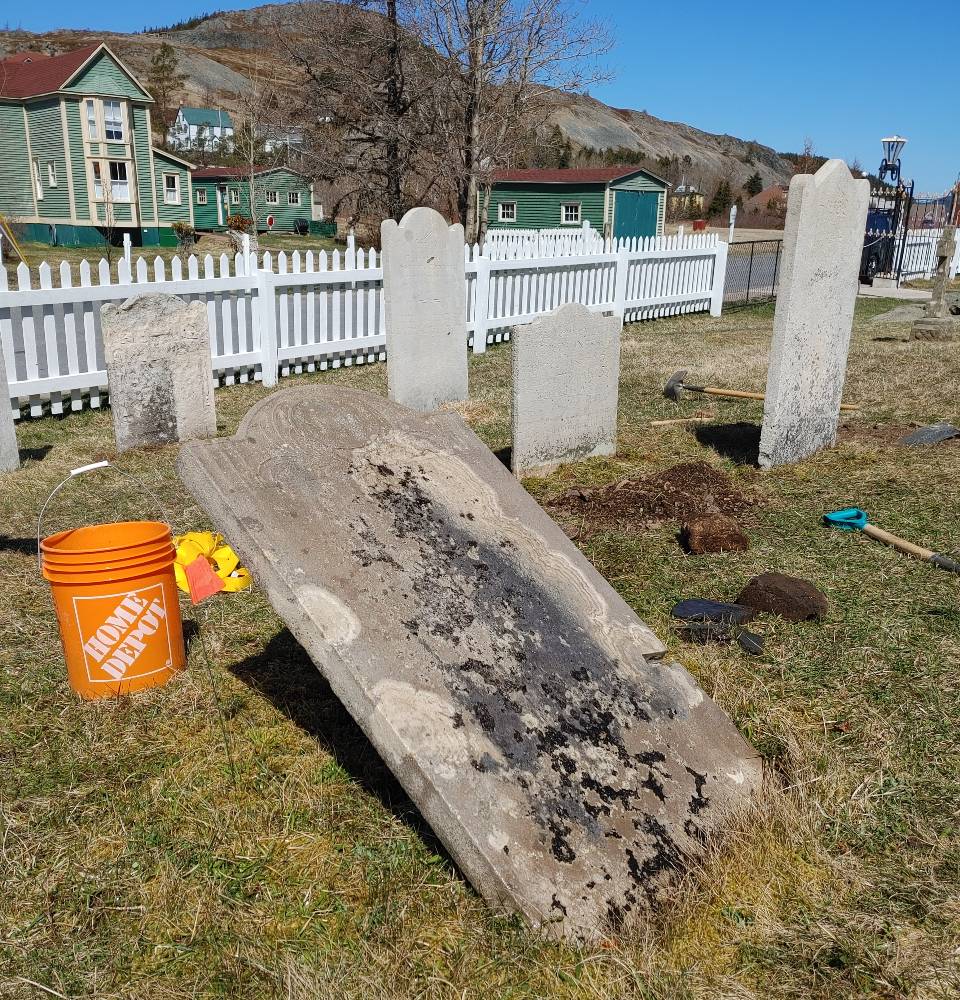
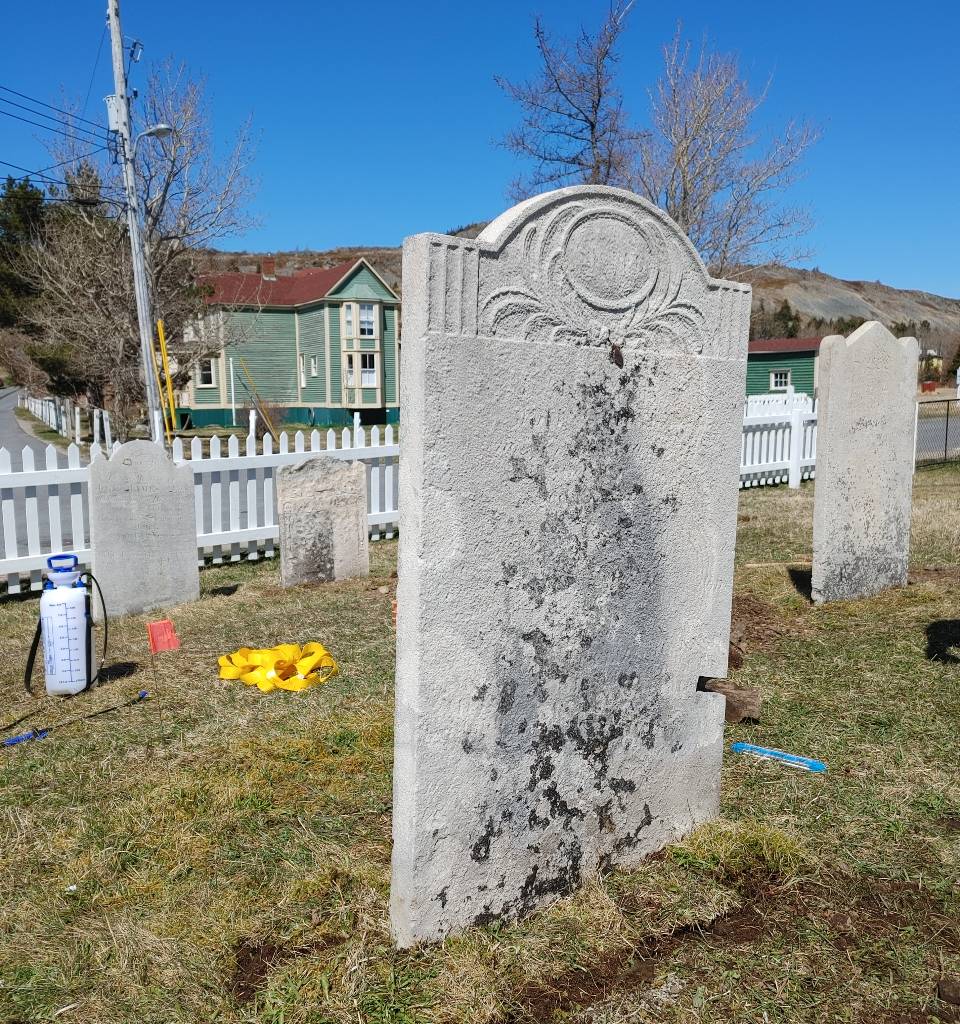
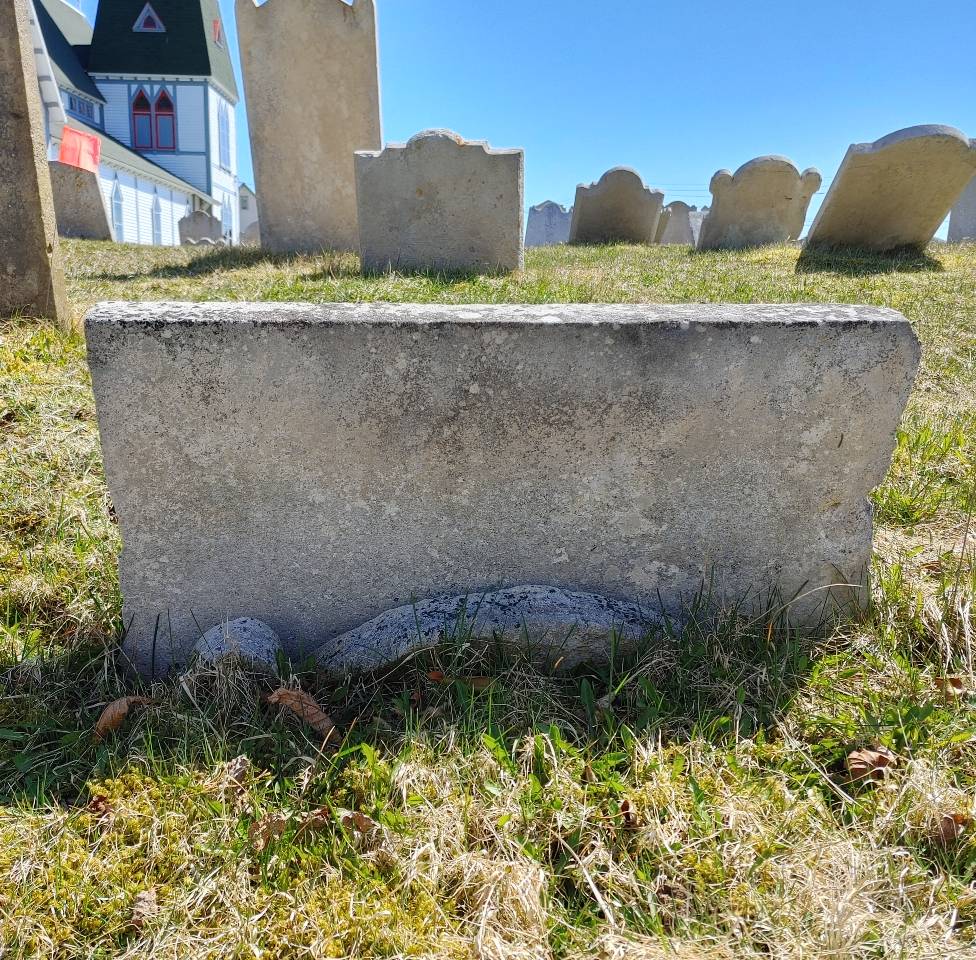
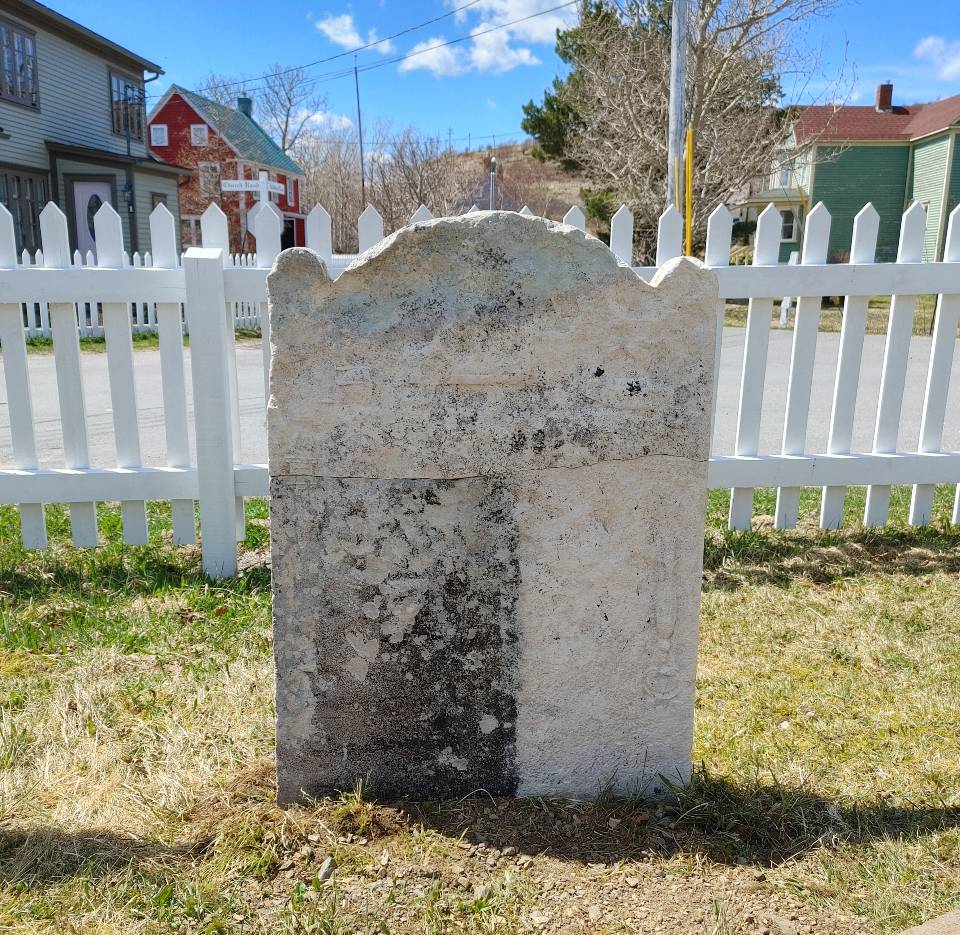
The photos above show two of the gravestones we restored during the first week of the project (#’s 16 and 23, if you are interested). They are great examples of the kind of work we have been doing. Stone #16 was leaning substantially backwards, putting a lot of pressure on the base of the stone and creating great risk that it would crack and fall. To repair this stone, we dug away the earth surrounding the base, and gave it more depth in order to provide stability. Then, once the tamped crusher dust was level and in place, we pulled the stone back to upright and secured it in place. The stone was then washed with primarily water and soft, natural fibre brushes, and treated with D/2, in a 1:1 mixture with water. It will continue to brighten up over the next few weeks, and the D/2 will prevent lichen growth for a few years.
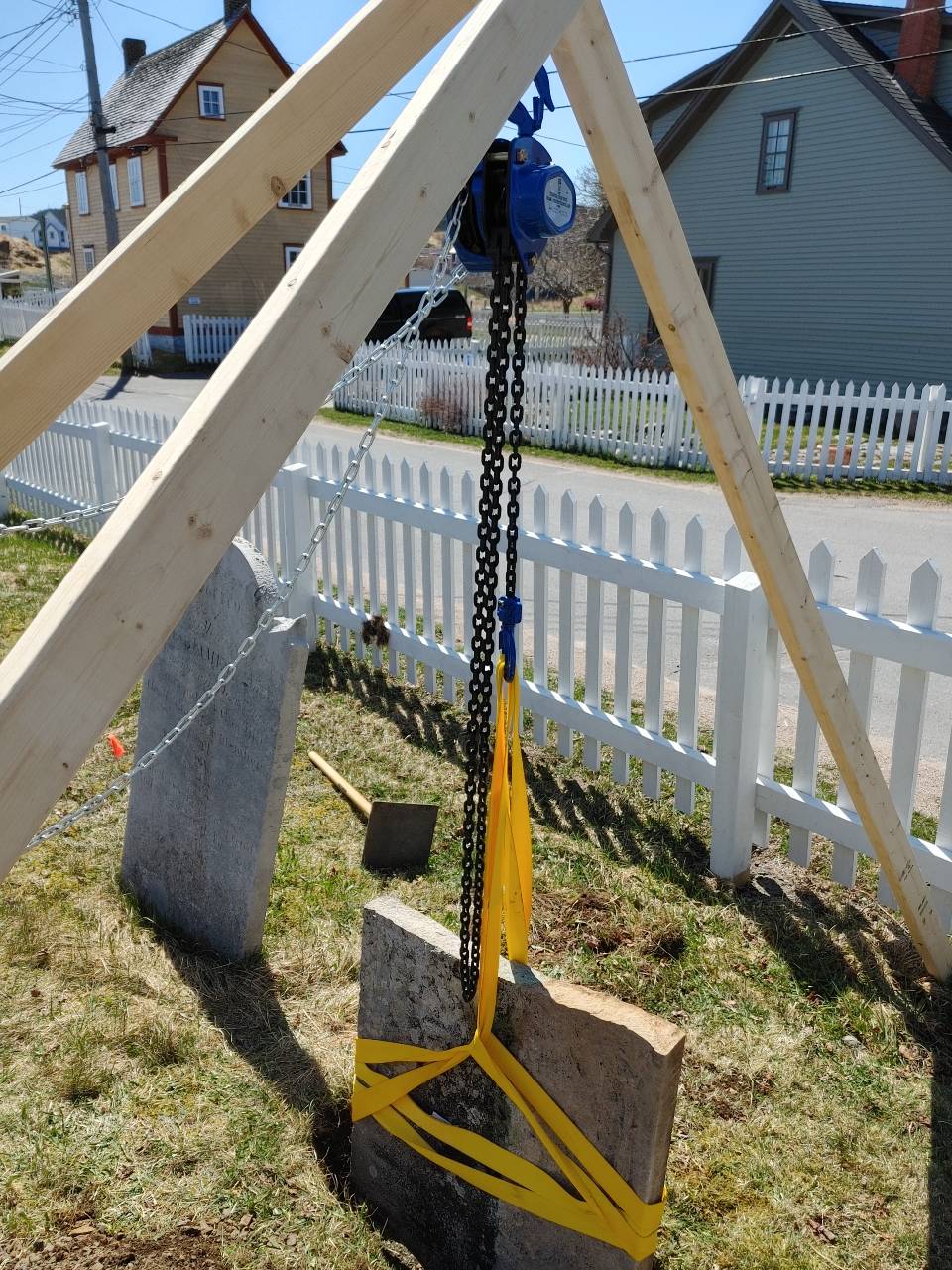
The second stone shown here, #23, was a really interesting one, and the first time we got to use our chain hoist! The stone had broken in half, and the top was tucked behind the bottom, but the bottom of the stone was turned 90 degrees. We used the chain hoist to pull the base fully out of the ground so that we could rotate it. Once the crusher dust foundation was set and the bottom half was reset to level, we used a UV-stable stone epoxy to secure the top portion back in place. The join was so clean that it did not need mortar to fill in any spaces. After resetting, we could see that while most of the inscription was worn away, there were mortality symbols on the top of the stone; an hourglass, a coffin, and possibly a skeleton in the centre, decorated the grave. This stone is directly beside the fence at the front of the site, if you are in the area!
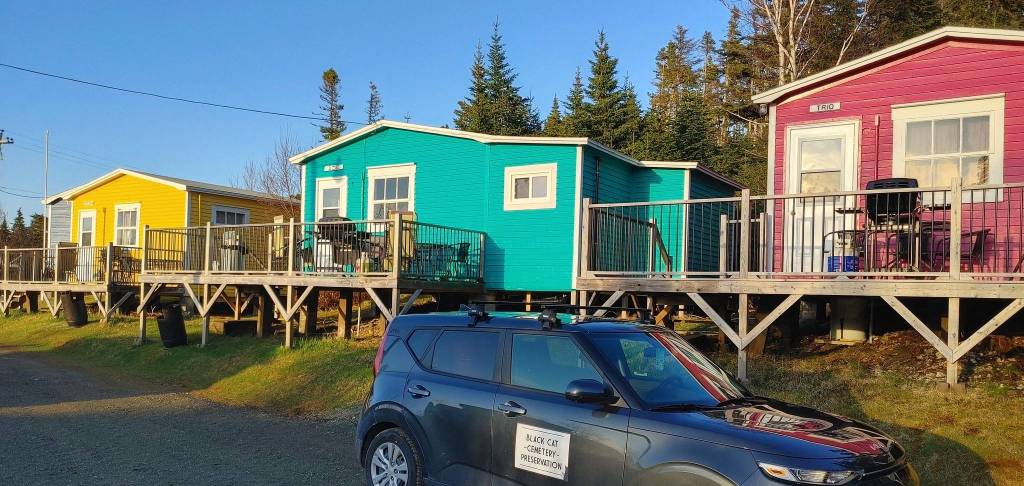
Over the course of Phase 2, we restored 75 gravestones. Some stones only needed to be cleaned, but others were leaning and needed resetting, and some required more complex repairs. We feel very grateful to our chain hoist! Without it, the work would have been a lot slower, and a lot more strenuous. It wasn’t all work though, we had a wonderful time exploring the local area, looking for icebergs and puffins, getting a pint at Port Rexton Brewing Co., snacking on Aunt Sarah’s chocolates, lunch at the Two Whales Cafe, and bbq’ing on the deck of our cabin! We’re home and recuperating now, but already looking forward to heading back in June.

 Black Cat Cemetery Preservation